See here for more stories of Lisnavagh
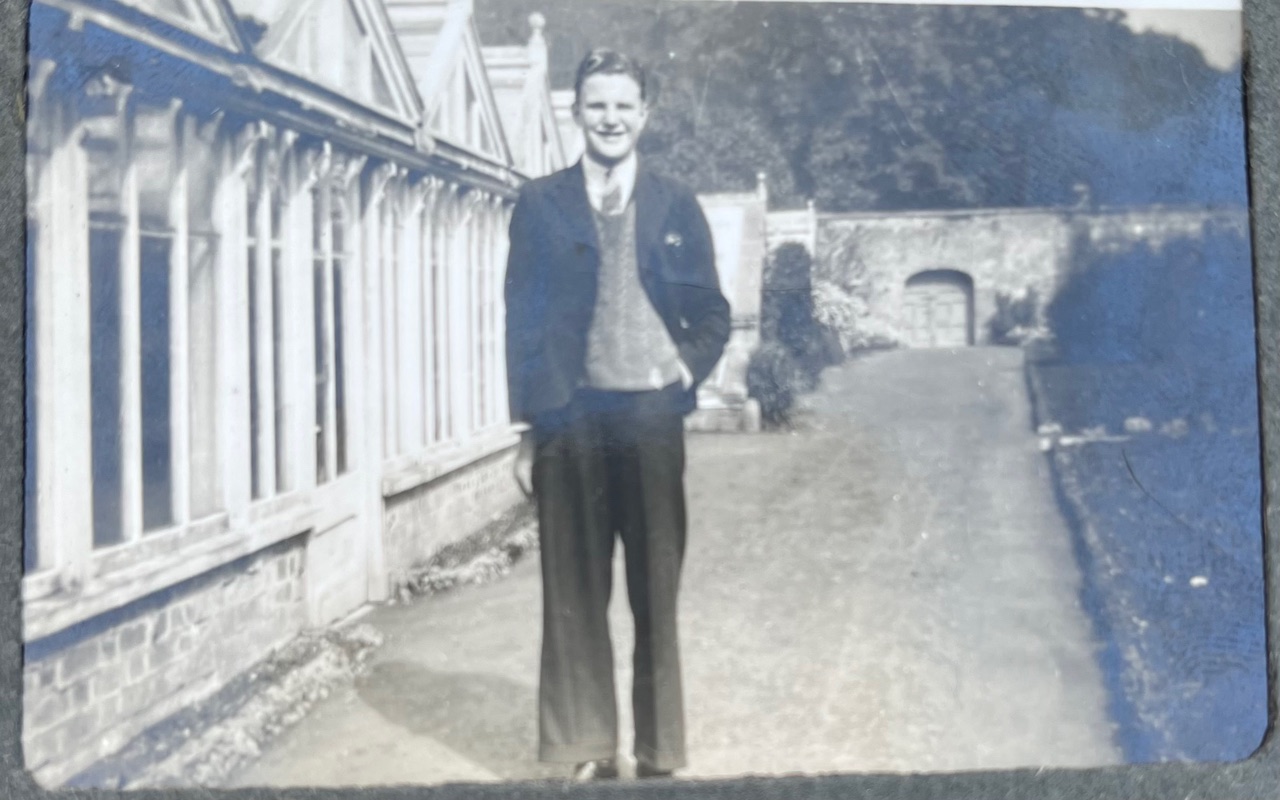
Willie Willis, son of Thomas, in the walled garden at Lisnavagh, Summer 1941. The greenhouse along the left was dismantled in the late 1970s when the swimming pool garden was built.
Thomas Willis was head gardener at Lisnavagh in the 1930s. Prior to Lisnavagh, he was head gardener on several estates in Ireland including Kilcrenagh (Cork), Mount Juliet (Kilkenny), Mulhuddart (Meath) and Durrow Abbey (Offaly). He would go on to work at Farragh (Longford), Hilton Park (Monaghan), Clonbrock (Galway), Balrarh (Meath) and Kildangan (Kildare).
Birth in County Down
Born in County Down in about 1892, Thomas Benjamin Willis was the son of Wicklow-born William Willis (born c. 1863-4), gardener, and his Armagh-born wife, Anne Jane (born c. 1864).
(NB: The 1901 Census lists both the Giff and Willis family living together in Kildavin … is this the same family as Henry Giff, later agent at Lisnavagh!?)
Dun Laoghaire (1911)
At the time of the 1911 census, the 19-year-old was living with his parents at 14 Barrett Street, Kingstown (Dun Laoghaire). He and his 48-year-old father were both recorded as “Gardener Daily”.[1] Also in the house were Thomas’s sister Sarah, born County Carlow, and a younger brother Edward Charles, born in Killiney, County Dublin, circa 1906. On the basis of birthplaces alone, this was clearly a family that moved about. Curiously, 14 Barrett Street was also the residence of William Egan, a soldier in the Royal Irish Rifles, who was a witness in the 1916 trial of Sir Roger Casement.
There’s a brief insight into what life was like as an estate gardener in Robert Harris’s novel Precipice (London, 2024), focusing on Prime Minister Asquith’s affair with Venetia Stanley in the tense months before the First World War. Detective Sergeant Paul Deemer is seconded from the police to a War Office intelligence unit to investigate leaks of classified telegrams, and goes undercover as a gardener at the Stanleys’ family estate in Wales.
The Marriage to Miss Finlay (1920)
Thomas was married on 1 September 1920 in the Parish Church, Killeshandra, to Mary Maud Finlay, who hailed from Ballickmoyler, County Laois.[2] They were married by licence, with John David Ludford and Fannie Finlay as witnesses. At the time of his wedding, he gave his address as at Kilcrenagh, Carrigrohane, Cork, and his profession as gardener. As such, he most likely worked for Ebenezer Pike, a prominent Cork Quaker businessman and railway/shipping director, who lived with his family at Kilcrenagh House, formerly known as Woodside.
Mount Juliet (1921-c. 1924)
After Kilcrenagh House was burned in May 1921, Ebenezer Pike into exile in England.[3] Thomas and his pregnant wife then made their way north to County Kilkenny where he found work as a gardener for the McCalmonts at Mount Juliet, attending to their rose gardens, glasshouses and the substantial Victorian garden. Mount Juliet was bought in 1914 by Sir Dermot McCalmont, who refurbished the house, built modern kennels, developed Ballylinch Stud, and provided dedicated staff housing during this period. The stud was founded for The Tetrarch, one of the most outstanding sires of the era. Thomas was thus working on a highly active sporting and estate enterprise. The Willis’s first two children were born at Mount Juliet. Annie Frances, known as Birdie, the mother of Walter Higgins, arrived on 4 October 1921. William Maxwell, known as Willie, followed on 12 March 1923. Their births were both registered in Thomastown district.
Priestown (c. 1925-1927)
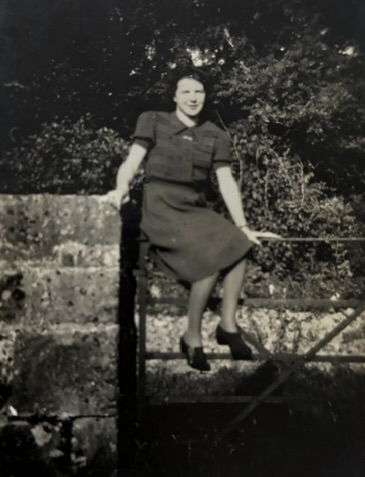
Birdie sitting on gate is Clonbrock, County Galway. August 1944
By 1925, the Willis’s had moved to at Priestown, Kilbride, near Ratoath, County Meath, where their second son Charles Henry, known as Charlie, was born on 7 July. [4] Thomas, aged 30, and ‘Mary M.’, aged 29, were at Priestown at the time of the 1926 census, here, along with their three small children, ‘Annie’ (Birdie), Willie and Charlie. The 1926 census also records Thomas as a gardener employed by James Tottenham Butler and his wife Geraldine, who farmed 607 acres in and around Priestown House. Long associated with the Butler family, Geraldine Butler would later leave Priestown House to her niece, Valerie Wellesley. A second daughter Iris Maude was born at Mulhuddart on 3 April 1927, which is also likely to be when the family were at Priestown.
The Willis Family in Dublin (1926)
Thomas’s parents were still alive at the time the 1926 census was recorded on 18 April, here. William and Anne Jane were aged 62 and 61 respectively, and living with Thomas’s younger brother Edward Charles Willis, aged 20, at Charlemont Mall, a street lined with late-Georgian and Victorian red-brick townhouses, on the northern banks of the Grand Canal in Portobello, Dublin. William still described himself as a gardener but noted that he has been out of work for two weeks. It looks like his last employer was a Mr Carey of Lansdowne Road, likely William Denis Carey, a 47-year-old Revenue Commissioner from Cork who lived with his family at 48 Lansdowne Road.
(NB: The 4th Baron Rathdonnell and his wife rented a house on Lansdowne Road during Horse Show week in the 1940s and 1950s, I believe it was either No. 48 or No. 49, possibly from the Coyle family.)
In 1926, Edward described himself as a machine hand, working at Liam Devlin’s Toffee Works on Gloucester Street, Dublin. Born in Derry in 1877, Devlin was a senior republican activist, publican, industrialist and businessman who moved to Dublin in 1919 and made his Parnell Street pub available to Michael Collins as GHQ of Intelligence during the War of Independence. In 1925, Devlin secured the Moylett Manufacturing Company, trading as Blue Badge Toffee / BB Toffee, and opened a toffee factory at 81–85 Gloucester Street Lower, now Seán McDermott Street Lower. By 1929 the Gloucester Street factory employed about 200 people.
Durrow Abbey (1928-1936)
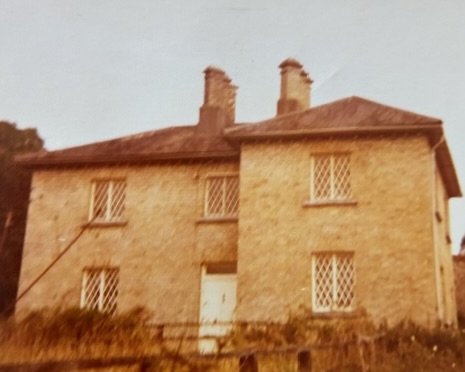
The Gardens at Durrow Abbey, the house with leaded windows, where the Willis family lived between 1928 and 1936.
By August 1928, Thomas had moved to Durrow Abbey, the County Offaly home of the Graham-Toler family. The house had been burned in April 1923 and rebuilt in 1926, with simplified Arts and Crafts interiors by Ralph Henry Byrne, so Thomas’s arrival by 1928 places him shortly after a major rebuilding phase. In 1932, their address was given as The Gardens at Durrow Abbey, as per here.*
Two more daughters were born here – Mary Elizabeth on 5 November 1928 and Sydney Patricia on 28 May 1932.
Mary Maude died on 11 July 1934 aged 39, and her youngest daughter Iris died just four days later, aged seven. They are buried together in Durrow, where Thomas would join them 19 years later.
A photograph taken of their house at Durrow Abbey in 1936 indicates that they were still there at that time.
* Their address was given as “Vernon Abbey, Kings County” on Mary Maude Willis’s death certificate but “Vernon” was surely a typo for “Durrow”.
Lisnavagh (c. 1936-1941)

Lisnavagh House
Thomas is thought to have become head gardener at Lisnavagh, possibly in succession to Charles Faulkner, in about 1936 or 1937. This was at a time when Tim McClintock Bunbury, 3rd Baron Rathdonnell, who died in 1937, was being succeeded by his only son William, 4th Baron Rathdonnell.
Mary Elizabeth Willis, Thomas’s daughter, was at a school in Tullow.
On 3 February 1937, Thomas remarried an Ellen Bingham, who may have been a housekeeper or cook at Lisnavagh. Ellen died on 11 December 1939; Lisnavagh was the address shown on death certificate. Walter has a recurrent memory that Ellen only had one leg.
Walter Higgins, Thomas’s grandson, says the family had a sound knowledge of Lisnavagh and the Rathdonnells (not sure which one). He also sent me four photographs of his family at Lisnavagh taken between August 1933 and April 1941. Birdie Willis, Walter’s mother, was the best friend of Cicely Wood, daughter of Walter Wood, the Lisnavagh chauffeur.
The Faulkner Link
In 2014, I received a letter from Caroline Flinter Cornellisen of Crettyard, Co. Laois, a kin of the Faulkners who once worked at Lisnavagh. Her uncle William Faulkner had lately passed away and she requested a tree be planted for the Faulkner family on the estate. I then proposed we plant a quartet of trees – one for the Faulkners, one for the Centenary of the 4th Baron Rathdonnell’s Birth (23 November), one for the Franklin Expedition and one for the Fallen of the Great War. William Bunbury duly planted four oak trees in the Farm Walk on 6 May 2016 here – probably close to the Hon. Beau Biden.
Farragh (c. 1942-?)
From Lisnavagh, Thomas Willis went to work for the Bond family at Farragh, near Killoe, County Longford. It was here that his daughter Birdie met Walter Kenneth Higgins, known as Ken, whom she married at Kells Church on 8 August 1951. Walter Mitchell Higgins, his father, was the steward at Farragh. I think Ken worked for British Airways and fetched up in Cheshire, as did Cicely Wood. Ken and Birdie were parents of Kenneth Walter Higgins, known to me as Walter Higgins.
Hilton Park (1943)
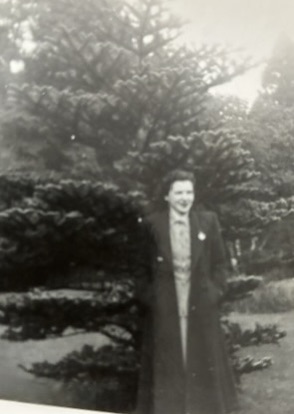
Birdie standing by a fir tree at Hilton Park in October 1943. It looks as though the photo was taken from the west upper corner of the terrace.

Hilton Park, County Monaghan, where the Willis family were based in 1943.
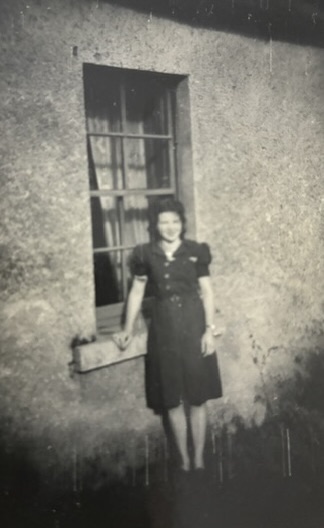
Birdie Willis standing by the Flat House at Hilton Park, May 1943.
Two Willis family photos taken at Hilton Park in May and October 1943 indicate that Thomas was working there at this time for Major John Madden and his wife Nita. Hilton Park is a large demesne near Clones, County Monaghan. They appear to have lived in the Flat House, now known as ‘The Cottage’, and available to let.
Formerly known as Maddenton, its gardens and park had earlier been designed or influenced by Ninian Niven, and the house remained the Madden family home with an estate of over 600 acres.
1943 came amid something of an interregnum at Hilton Park. Major Madden’s father died in 1935 and he did not didn’t return permanently until 1945. That said, Johnny Madden believes his family spent a fortnight or at Hilton in 1942. He has a vague memory of being carried around a party for staff on the shoulders of Robert Pielow, the head gardener / steward. Perhaps Thomas Willis was present. At this time, Hilton Park was managed by Geoffrey Corbett, the agent at Crom Castle, who was lent to Hilton one day a week.
Clonbrock (1944)
A Willis photograph indicates that by August 1944 he was at Clonbrock House, Ahasgnagh (Áth Eascrach), County Galway. Clonbrock had been the seat of the Dillon family, Barons Clonbrock, since the late 18th century. Until 1917, the head of the family was Luke Gerald Dillon, 4th Baron Clonbrock, and after him his son Robert Edward Dillon, 5th Baron Clonbrock, a bachelor, who died unmarried in 1926, when the title became extinct.
After Robert’s death, Clonbrock passed to his sister Ethel Louisa Dillon, who remained there for many decades. A local account says the Dillons could no longer afford to employ servants after 1929, suggesting the Wall Street Crash was an especially lousy event for them.
The National Library of Ireland’s Clonbrock Photographic Collection covers c. 1860-1930 and includes daily life on the Dillon estate, including family, staff, neighbours and friends.
Balrath Bury (1949)
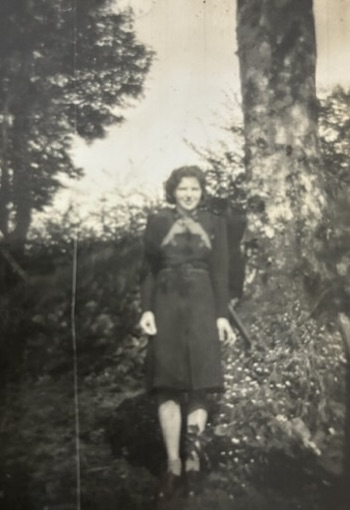
Birdie standing in garden in front of trees is Balrath Bury, September 1949.
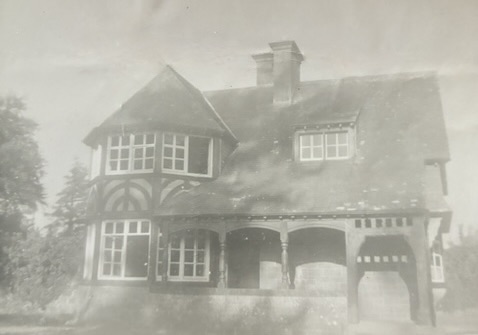
The fine house, with bay windows, where the Willis family lived at Balrath Bury, Kells, dated September 1947.
Two photographs in the Willis archive are dated to September 1947 (showing the house where they lived) and September 1949. His likely employer was Captain Christopher Hampden Nicholson, born 1903, who married Stephanie Adelaide Edwards in 1928.
Captain Nicolson was the son of John Hampden Nicholson (1871-1935) JP, High Sheriff of Co. Meath (1895) and his wife Florence Isabel Rothwell of Rockfield, Kells. The house itself was a substantial 18th-century mansion near Kells, with a long stable block and a demesne-house profile entirely consistent with employing a professional gardener.
Kilcooley Abbey
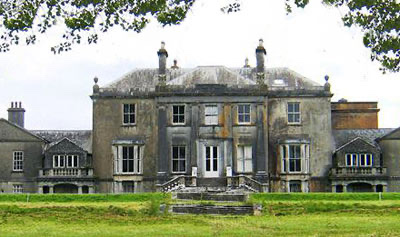
Kilcooley Abbey, near Gortnahoe, Thurles, Co Tipperary
Thomas is also said to have worked for the Ponsonby family in the gardens at Kilcooley Abbey, County Tipperary , but there are no known dates or details.
Death at Kildangan (1953)
In the summer of 1953, Thomas moved to Kildangan, County Kildare, to work for Roderic More O’Ferrall, a well-known racehorse trainer. He died just weeks later on 19 August 1953, aged 60 or 61, as reported by the Leinster Leader:
Mr Thomas Benjamin Willis, of Larchfield Park, Goatstown, Dundrum, Dublin, a gardener at Mr. R. More Ferrall’s estate, Kildangan, who was to have spent the week-end with his family, died while walking to Monasterevan railway station on Saturday last. His suit case was found beside the body in the drive leading to the estate. Mr. Willis, who was aged 60, had been in Mr. More O’Ferrall’s employment only a few weeks. The interment took place on Monday in Durrow, Tullamore. He is mourned by his family.[5]
Acknowledgments
With thanks to Walter Higgins.
End-Notes
[1] 1911 Census, Barrett Street.
[2] Ballickmoyler, County Laois, is her place of birth as listed on the 1926 census here.
[3] Jeremiah Twomey was still recorded as the gardener at Kilcrenagh House in 1923, while the Pikes also employed the Creber family.
[4] His birth was registered in the Ratoath Registrar’s District, within the Dunshaughlin Superintendent Registrar’s District.
[5] Leinster Leader, 5 September 1953, p. 9.